First Fires
People

Tupinambá

Pending reviewNot yet checked by a community or historical reviewer.

Tupi-speaking peoples of the Atlantic coast of what is now Brazil: villages of great houses round a plaza, manioc fields cleared from the forest, fishing and canoes. They live on today.

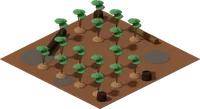
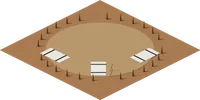
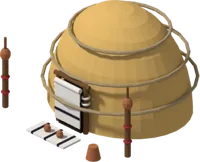
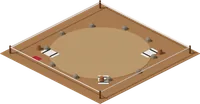
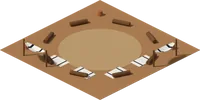
When the Portuguese and the French reached the coast in the 1500s, Tupi-speaking peoples lived along much of it, from the mouth of the Amazon to São Paulo. The Tupinambá were among the best known: villages (taba) of a few large longhouses (oca) set round an open plaza (ocara), each house home to many families who hung their hammocks along it.

They grew manioc and other crops in fields cleared and burned in the forest, fished the rivers and the sea, and moved the village every few years when the soil and the game nearby were worn out: the move at the heart of this game. A village was led by persuasion more than command: the elders and the morubixaba (the chief) spoke in council, and the pajés (shamans) were respected healers and seers.

Their language, Old Tupi, became the língua geral spoken across colonial Brazil, and many Brazilian words and place names come from it. War, enslavement and epidemics after 1500 killed very many, but the Tupinambá did not disappear: the Tupinambá of Olivença in Bahia, among others, live and organise today, and in 2024 they welcomed home a Tupinambá feather mantle returned from the National Museum of Denmark.

Much of what was written about them in the 1500s comes from European visitors such as Staden and Léry, who saw them through their own fears and beliefs. The codex reads those accounts with care and puts the voices of Tupinambá people today first.

Colours in the game: the cotton cords, sashes, armbands and cloths in your colour mark your village. The Tupinambá's own colours stay as the patterns on top: the red of urucum and the blue-black of jenipapo painted on the body, white cotton, and the red and yellow of feathers (the scarlet ibis for the great mantles).
Sources

  • Indigenous voiceGlicéria Tupinambá (Célia Tupinambá), artist and leader of the Tupinambá of Olivença, on remaking the feather mantles
  • Indigenous voiceTupinambá de Olivença community, Bahia (Terra Indígena Tupinambá de Olivença)
  • ResearchCarlos Fausto, Os índios antes do Brasil (2000)
  • ResearchFlorestan Fernandes, A organização social dos Tupinambá (1949)
  • Early European account, read with careHans Staden, Warhaftige Historia (1557)
  • Early European account, read with careJean de Léry, Histoire d'un voyage faict en la terre du Brésil (1578)
The land 1

Buildings 14

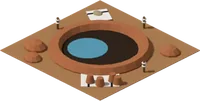
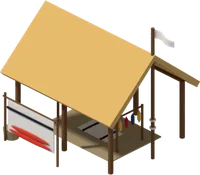
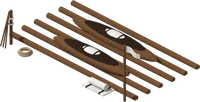
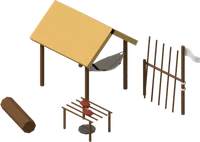
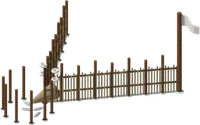
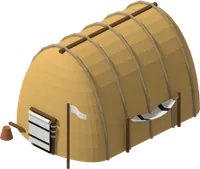
OcaraThe open plaza at the heart of a Tupinambá village, ringed by the great houses: where the village met, talked, danced and feasted.Pending reviewOcaThe great communal house of a Tupinambá village: a long hall of poles thatched with palm, home to many related families, each with its own hammocks and fire.Pending reviewRoçaA field cleared and burned in the forest, where manioc was planted with maize, sweet potatoes, beans, peanuts and cotton. After a few years it was left to grow back into forest.Pending reviewWarriors' groundThe game's barracks. A Tupinambá village had no separate barracks: every grown man was a warrior, and war parties gathered in the plaza.Pending reviewClay pitWhere the clay for pots was dug, on wet ground by a river or a lagoon. Tupi pottery, painted in red and black on white, is among the finest of ancient Brazil.Pending reviewLookout towerA tower for archers, built by the game. Early accounts do not describe towers like this in Tupinambá villages; it stands for the watch the village kept.Pending reviewPajé's houseIn the game, the house where the pajé lives, receives the sick and keeps the maracás. It brings Favour faster than the sacred place.Pending reviewFeatherworkers' houseWhere feather work was made: headdresses, armbands and the great mantles of red guará feathers, worn by the most honoured people at the feasts.Pending reviewCanoe landingThe shore where the village kept its canoes and brought in the catch. The Tupinambá were people of the coast and the rivers, at home on the water.Pending reviewMoquémA wooden grill over a slow fire, where meat and fish were smoked to keep. The word moquém and the verb moquear come from Tupi.Pending reviewCaiçaraThe palisade of sharpened trunks round a Tupinambá village, often in two rings, with narrow openings. Caiçara today also names the fishing communities of the southern coast.Pending reviewTrading groundThe game's market. The Tupinambá had no markets like those of the Andes; goods moved between villages as gifts and exchanges, at visits and feasts.Pending reviewSacred placeA clearing with carved posts where the village prays and calls on the beings of the forest. The place is the game's; the beliefs it points to are real and alive.Pending reviewFish weirThe pari, a fence of stakes and woven cane set in a river or a tidal channel to trap fish.Pending review

Units 14

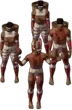
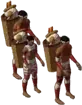
PajéThe pajé is the healer and seer of the village, who speaks with the spirits, cures with smoke, herbs and song, and reads what is coming.Pending reviewVillagerThe women and men of the village, whose work fed everyone: clearing and planting, hunting and fishing, building, cooking, making pots, hammocks and tools.Pending reviewClub warriorA warrior with the tacape, a heavy club of hardwood with a broad, sharp-edged head, often decorated with feathers and shells.Pending reviewArcherArchers with long bows of hardwood and arrows of cane, with points of wood, bone or stingray spine for war, hunting and fishing.Pending reviewVillage processionWhen the village moves, the morubixaba and the elders lead the people to the new site, carrying the village's fire. The carried post and embers are the game's image of that move.Pending reviewPortersPeople who carry goods over long paths in great baskets on their backs, held by a band across the forehead.Pending reviewCanoe warriorsWar parties went by water as often as on foot: fleets of canoes moved along the coast and up the rivers to attack and to defend.Pending reviewMorubixaba's guardThe game's name for the chief's best warriors: renowned fighters, painted with urucum and genipapo and adorned with feathers.Pending reviewScoutFast runners who went ahead of a war party or a move, to read the paths, find the enemy and bring word back.Pending reviewFishing canoeCanoes and rafts that went out to the shoals, in the bays and along the reefs. Fish were a main food of the coastal Tupinambá.Pending reviewThe rival villageTupi-speaking villages often fought each other. War between rival groups, to avenge their dead, was part of Tupinambá life, and the Europeans used these rivalries.Pending reviewYoung warriorsThe kunumĩ-guasu, the young men of the village, not yet full warriors.Pending reviewWar canoeThe igara, a dugout cut from a single great trunk, or made of bark, that carried a war party along the coast.Pending reviewGreat war canoeThe largest dugouts, said to carry some thirty warriors.Pending review

Knowledge 27

Smoke blessingTobacco (petyma in Old Tupi) was sacred: the pajés blew its smoke over the sick, the warriors and the people, to heal and to strengthen.Pending reviewSwift canoesLighter canoes and longer paddles: knowledge of the woods and of the water, passed from builder to builder.Pending reviewStrength of the spiritsOfferings to the beings of the forest, so that they lend their strength to the village.Pending reviewMutirãoShared work: when a big job had to be done, the whole village came to help, and the host gave food and cauim to everyone who worked.Pending reviewPanacu basketsThe panacu, a long basket woven of palm leaf and carried on the back, for manioc, fish, fruit and firewood.Pending reviewHammocksThe hammock is an invention of the Indigenous peoples of tropical America. The Tupinambá slept in hammocks of cotton (ini) hung between the posts of the oca.Pending reviewCoivaraFelling and burning the forest to plant: the ash feeds the soil, and the field later goes back to forest.Pending reviewTrackingHunters read the forest: tracks, broken twigs, the fruit animals had eaten, the calls of birds.Pending reviewCamboasThe camboa is a fish trap of stakes and woven sticks set where the tide goes out, so that the fish are left inside.Pending reviewStone axesAxe heads of hard stone, ground and polished, set into a wooden handle. Felling a great tree with them took time and skill.Pending reviewManioc flourBitter manioc made safe and lasting: grated, squeezed in the tipiti, then toasted in great clay pans into farinha.Pending reviewTumplinesA strap across the forehead holds a load on the back, so the neck and back share the weight and the hands stay free.Pending reviewHunting bowsBows of hard palm wood, and arrows made for each animal: barbed points for big game, blunt or forked points for birds.Pending reviewHardwood tacapeTacapes cut from the hardest woods of the forest, heavy as stone, with edges that cut.Pending reviewFire arrowsArrows tipped with burning cotton, shot onto thatched roofs and palisades.Pending reviewUrucum and genipapoBody paint: red from urucum (annatto) seeds and black from the juice of the genipapo fruit, painted in patterns.Pending reviewGreat cauim feastThe cauinagem: days of drinking cauim, singing and dancing, when guests came from other villages.Pending reviewCaiçaraThe palisade of trunks round the taba, often doubled, built when war was near.Pending reviewWar chantSongs sung before and on the way to war, recalling the dead and the deeds of the ancestors.Pending reviewLong chantsRites that go on through the night, with the maracá, songs and dances in a circle.Pending reviewWide blessingMore people join the rite, and the blessing reaches further.Pending reviewOpen seaBigger canoes and long paddles take the fishers out past the shallows, to the great shoals.Pending reviewTaquara arrowsLight, straight arrows of taquara cane.Pending reviewLight armourWarriors who went to war painted and almost unclothed, trusting to speed.Pending reviewHeavy armourThe front-line warriors, who closed in with the club.Pending reviewMoquémThe wooden grill over a slow fire where meat and fish were smoked dry.Pending reviewGreat igaraBigger war canoes, with more paddlers.Pending review

Myths and patrons 8

Great works 2

How the Tupinambá play in First Fires