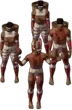
Village procession
Pending reviewNot yet checked by a community or historical reviewer.
Still to check: how often and why villages moved (Fernandes, Fausto).
When the village moves, the morubixaba and the elders lead the people to the new site, carrying the village's fire. The carried post and embers are the game's image of that move.
Every few years, when the fields and the game nearby were worn out or after deaths and bad omens, a Tupinambá village moved and built its houses again somewhere else, often keeping its name. The chief and the elders chose the place and led the move.
Moving the village is at the heart of this game. Today the Tupinambá of Olivença take back parts of their ancestral land through retomadas (retakings), and their historians, like Casé Angatu, tell this story as the Tupinambá's own.
In the game: "Move the village" at the ocara creates the procession. If it is killed, the village is lost: keep warriors with it.

Sources
- Indigenous voiceTupinambá de Olivença community, Bahia (Terra Indígena Tupinambá de Olivença)
- Indigenous voiceCasé Angatu (Carlos José Ferreira dos Santos), Tupinambá historian and teacher, Olivença, writings on Tupinambá history and territory
- ResearchFlorestan Fernandes, A organização social dos Tupinambá (1949)
- ResearchCarlos Fausto, Os índios antes do Brasil (2000)
- Early European account, read with careJean de Léry, Histoire d'un voyage faict en la terre du Brésil (1578)