
Caraíba: the wandering prophet
Reviewed
Still to check: the spellings karaí / caraíba, and how the caraíbas were received (Nóbrega, Métraux, Clastres).
The caraíbas (karaí) were great pajés who went from village to village. They were welcomed with feasts, spoke through the maracá, and told of abundance and of a land without evil.
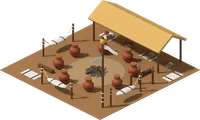
When a caraíba was coming, the village cleaned its paths and prepared cauim. People gathered in the ocara to hear him: through the maracá the spirits spoke, and he promised harvests that grow by themselves and long life.
The Tupi-Guarani prophets spoke of a land without evil (Yvy Marã'ey in Guarani). At times whole villages followed them and set out to look for it; Guarani communities still keep these teachings today.
Early European missionaries saw the caraíbas as rivals, and later the word was used for Europeans themselves. The game uses it in its older sense.
In the game: the hero of the Tupinambá great work, a prophet and not a fighter. Near him people work faster, warriors fight harder and the wounded heal. His power, the gathering of the villages, can be called once.

Sources
- Indigenous voiceTupinambá de Olivença community, Bahia (Terra Indígena Tupinambá de Olivença)
- Indigenous voiceKaká Werá Jecupé, A terra dos mil povos: história indígena do Brasil contada por um índio (1998)
- ResearchHélène Clastres, La terre sans mal: le prophétisme tupi-guarani (1975)
- ResearchAlfred Métraux, Les messies de l'Amérique du Sud (1931)
- ResearchCurt Nimuendajú, Die Sagen von der Erschaffung und Vernichtung der Welt als Grundlagen der Religion der Apapocúva-Guaraní (1914)
- Early European account, read with careManuel da Nóbrega, letters from Brazil (1549)