
The rival village
Pending reviewNot yet checked by a community or historical reviewer.
Tupi-speaking villages often fought each other. War between rival groups, to avenge their dead, was part of Tupinambá life, and the Europeans used these rivalries.
The Tupinambá and the Tupiniquim spoke nearly the same language and lived alike, but were bitter enemies. Raids, ambushes and the taking of captives went back and forth between villages, each answering the last. When the Portuguese and the French arrived, each allied with one side: the Tupiniquim with the Portuguese, the Tupinambá with the French.
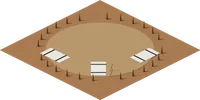
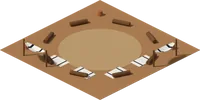
The rival village in the game is no one people: it stands for any neighbour at war.
In the game: rival war camps send war parties against your village and keep guards around them. Destroy every camp to win.
Sources
- Indigenous voiceCasé Angatu (Carlos José Ferreira dos Santos), Tupinambá historian and teacher, Olivença, writings on Tupinambá history and territory
- Indigenous voiceTupinambá de Olivença community, Bahia (Terra Indígena Tupinambá de Olivença)
- ResearchFlorestan Fernandes, A função social da guerra na sociedade tupinambá (1952)
- ResearchCarlos Fausto, Os índios antes do Brasil (2000)
- Early European account, read with careHans Staden, Warhaftige Historia (1557)
- Early European account, read with careJean de Léry, Histoire d'un voyage faict en la terre du Brésil (1578)