Inca
Pending reviewNot yet checked by a community or historical reviewer.
The people of Tawantinsuyu, the state centred on Cusco that by 1530 reached along the Andes from today's Ecuador to Chile. Quechua, its language, is spoken by millions today.
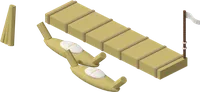
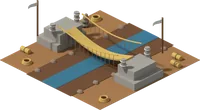
Tawantinsuyu means 'the four parts together' in Quechua. From the city of Cusco, the Inca grew in about a century from one of many Andean peoples into a state of millions, joined by the Qhapaq Ñan, a network of roads tens of thousands of kilometres long, with rope bridges, storehouses and resting posts.
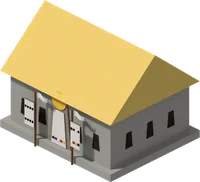
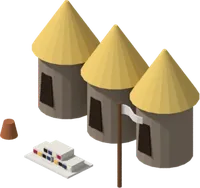
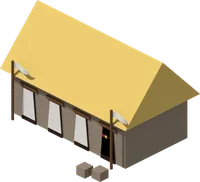
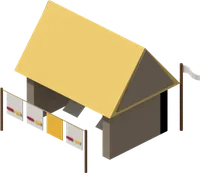
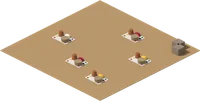
It ran without markets or money as we know them. Every ayllu (community) owed turns of shared work, the mit'a, on fields, roads and buildings; the state kept the harvests in qollqa (storehouses), shared them out, and kept count with khipu, knotted cords.
The Spanish invasion from 1532 brought war and epidemics and ended the Inca state, but not the Andean peoples: Quechua and Aymara communities keep many of the old ways, from shared work and offerings to Pachamama to rebuilding the Q'eswachaka rope bridge every year.
The codex weighs the Spanish chronicles with care and puts Andean voices first: Guaman Poma, an Andean noble who wrote and drew a long letter to the king of Spain; the Inca Garcilaso, son of an Inca noblewoman; and the Quechua stories written down in Huarochirí.
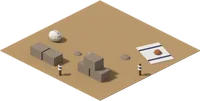
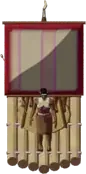
Colours in the game: the yoke of the unku, the lliclla, belts, borders and blankets in your colour mark your people. The Andean colours stay as the patterns on top: the red of cochineal, indigo blue, yellow, and the natural whites, browns and blacks of llama and alpaca wool, woven in tocapu squares; the finest cloth, cumbi, was woven for the state.

Sources
- Indigenous voiceFelipe Guaman Poma de Ayala, El primer nueva corónica y buen gobierno (c. 1615)
- Indigenous voiceInca Garcilaso de la Vega, Comentarios reales de los Incas (1609)
- Indigenous voiceThe Huarochirí manuscript, written in Quechua (c. 1608)
- ResearchTerence N. D'Altroy, The Incas (2nd ed. 2014)
- ResearchJohn V. Murra, The Economic Organization of the Inka State (1956, published 1980)
- Heritage recordUNESCO World Heritage: Qhapaq Ñan, Andean Road System (2014)
- Early European account, read with carePedro Cieza de León, Crónica del Perú (1553)