
Llamas and alpacas
Pending reviewNot yet checked by a community or historical reviewer.
Still to check: How the state's and the Sun's herds were kept and counted comes mostly from colonial writers (Murra's reading of them); to check with Quechua and Aymara herders' own accounts.
The herds of the Andes: llamas for carrying and meat, alpacas for their fine wool, grazing the high puna where little else grows.
Herds were wealth in the Andes. Families kept their own, and the state and the Sun had great herds of their own, counted on knotted cords (khipu). The wool went to the weavers, and the finest cloth was among the most valued things in the land; the animals also gave meat, dried as charqui, and dung for fires where there was no wood. Herders of the puna still keep llamas and alpacas today.
In the game: from the second era, at the ushnu, up to 6. Grazing near your village they give food, and wool for treasure; on the high puna, half as much again.
 Llama caravan
 Aqllawasi
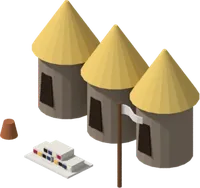 Qollqa
Sources
- Indigenous voiceQuechua and Aymara herding communities of the puna today
- Indigenous voiceFelipe Guaman Poma de Ayala, El primer nueva corónica y buen gobierno (c. 1615)
- ResearchJorge A. Flores Ochoa (ed.), Pastores de puna: uywamichiq punarunakuna (1977)
- ResearchJohn V. Murra, The Economic Organization of the Inka State (1956, published 1980)