Qhatu
Pending reviewNot yet checked by a community or historical reviewer.
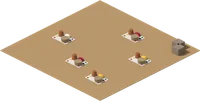
A marketplace where goods were bartered. Most goods in the Inca world moved through gifts, kinship and the state's stores; the qhatu was the place for exchange between people.
The Andean economy worked without money. Families and ayllus reached many heights and climates through their own kin and lands, and the Inca state gathered work and goods and gave them out again. Still, there were markets (qhatu) where people bartered: maize for wool, salt for chili, potatoes for fruit from the valleys.
Barter markets still meet in the Andes, where goods are exchanged without money.
In the game: from the third era, the market square. Create llama caravans here; food, wood and stone can be bought and sold here for treasure.

Sources
- Indigenous voiceInca Garcilaso de la Vega, Comentarios reales de los Incas (1609)
- ResearchJohn V. Murra, The Economic Organization of the Inka State (1956, published 1980)
- ResearchEnrique Mayer, The Articulated Peasant: Household Economies in the Andes (2002)
- ResearchTerence N. D'Altroy, The Incas (2nd ed. 2014)