Mit'a
Pending reviewNot yet checked by a community or historical reviewer.
The mit'a was the turn of shared work each household owed to its community and to the state, on the fields, roads and buildings.
In Quechua mit'a means a turn, a season. The Inca state grew out of older Andean ways of helping each other, such as ayni (help given now and returned later) and mink'a (work for the community, paid back with food and drink): every household took its turn, and the state fed and housed those who worked.
After the conquest the Spanish kept the word but turned it into something else: the colonial mita, a forced draft of Indigenous men for the silver mines of Potosí and other works, which killed very many. The codex keeps the two apart.
Shared work lives on in the Andes today, as when four communities rebuild the Q'eswachaka bridge together.
In the game: the founding power of the Inca, the Mit'a call, makes every villager work faster for a while.
 Ushnu
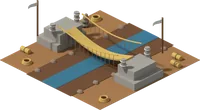 Q'eswachakaAyni
Sources
- Indigenous voiceFelipe Guaman Poma de Ayala, El primer nueva corónica y buen gobierno (c. 1615)
- Indigenous voiceQuechua communities of the southern Andes today
- ResearchJohn V. Murra, The Economic Organization of the Inka State (1956, published 1980)
- ResearchTerence N. D'Altroy, The Incas (2nd ed. 2014)