Q'eswachaka
Pending reviewNot yet checked by a community or historical reviewer.
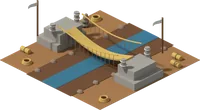
A bridge of woven grass over the Apurímac river, rebuilt by hand every year by four Quechua communities, as Inca bridges were.
The Inca road network, the Qhapaq Ñan, crossed deep gorges on bridges of rope made from grass. Q'eswachaka, in the province of Canas near Cusco, is the last of them still kept: about 30 metres long, high over the river.
Every year, usually in June, the families of Huinchiri, Chaupibanda, Choccayhua and Ccollana Quehue twist q'oya grass into cords, braid the cords into great ropes and, over three or four days, take down the old bridge and weave the new one. A paqo (ritual specialist) makes offerings to the Apus and to Pachamama before the work begins.
The renewal was recognised by UNESCO in 2013. In the game it is a shared great work: one of the peaceful victories planned for later comes from it.
In the game: the Inca great work, one per player in the third era. While it stands it gives steady Favour.
 Inca
 Manco CápacAyni
Sources
- Indigenous voiceThe Quechua communities of Quehue (Huinchiri, Chaupibanda, Choccayhua, Ccollana Quehue), Canas, Cusco
- Indigenous voiceInca Garcilaso de la Vega, Comentarios reales de los Incas (1609)
- ResearchTerence N. D'Altroy, The Incas (2nd ed. 2014)
- Heritage recordUNESCO Intangible Heritage: knowledge, skills and rituals related to the annual renewal of the Q'eswachaka bridge (2013)
- Heritage recordUNESCO World Heritage: Qhapaq Ñan, Andean Road System (2014)
- Early European account, read with carePedro Cieza de León, Crónica del Perú (1553)