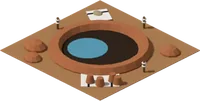
Clay pit
Pending reviewNot yet checked by a community or historical reviewer.
Still to check: the word igaçaba and its uses.
Where the clay for pots was dug, on wet ground by a river or a lagoon. Tupi pottery, painted in red and black on white, is among the finest of ancient Brazil.
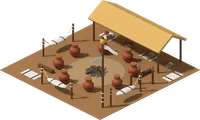
Making pots was women's work. They dug the clay, tempered it, built the pots up in coils and fired them in the open. Archaeologists call the style of the Tupi-speaking peoples the Tupiguarani tradition: bowls and great jars painted with fine red and black lines, or with patterns pressed in with the fingers.
The biggest jars held the cauim for the feasts; others, the igaçabas, were used to bury the dead. Broken pieces of them are found along the whole coast and tell where villages once stood.
In the game: clay takes the place of stone for the Tupinambá. Up to three villagers dig here, and it must be built within five squares of water.

Sources
- Indigenous voiceTupinambá de Olivença community, Bahia (Terra Indígena Tupinambá de Olivença)
- ResearchAndré Prous, O Brasil antes dos brasileiros: a pré-história do nosso país (2006)
- ResearchAlfred Métraux, La civilisation matérielle des tribus tupi-guarani (1928)
- Early European account, read with careJean de Léry, Histoire d'un voyage faict en la terre du Brésil (1578)